
What to actually do if your Mandeville crawl space stays wet after a storm
Mandeville homeowners often find standing water under their homes after a Northshore storm. This water does not just sit there. It actively damages your floor joists and creates a breeding ground for wood-destroying organisms. The high water table in St. Tammany Parish means that traditional gravity drainage rarely works. If your crawl space remains damp more than 24 hours after a storm, you must take professional action to protect your foundation. This is not just about comfort. It is about the structural integrity of your property.
The 2026 weather patterns have brought heavier rainfall totals to the Northshore. This increased volume puts immense hydrostatic pressure on your foundation. When the soil around your home becomes saturated, water pushes through the ground and into the low points of your crawl space. If you live in neighborhoods like Beau Chene or near the Mandeville lakefront, you are likely dealing with heavy clay soil that holds onto moisture. This soil acts like a sponge. It keeps the wood under your house in a constant state of saturation.
Identify the source of the trapped moisture
You first need to determine if the water is coming from above or below. Storm surge and heavy rain can flood a crawl space from the surface. But often the water seeps up from the ground itself. In 2026, we see more cases of rising groundwater in Old Mandeville. Look for signs of efflorescence on your brick piers. This white powdery substance is a mineral deposit left behind when water evaporates. It proves that moisture is moving through your masonry. If your piers look damp, the water is already inside your structural supports.
Check your gutters and downspouts immediately. Many Mandeville homes have downspouts that dump water right next to the foundation. This mistake adds hundreds of gallons of water to your crawl space every hour during a storm. You should extend your downspouts at least ten feet away from the house. This simple fix can reduce the load on your drying system. If the water is coming from a plumbing failure during the storm, the situation is different. For those dealing with waste issues, you should consult our guide on who to call for emergency sewage cleanup in Metairie and how to handle the damage now as the biological risks are similar.
The danger of structural wood rot in high humidity
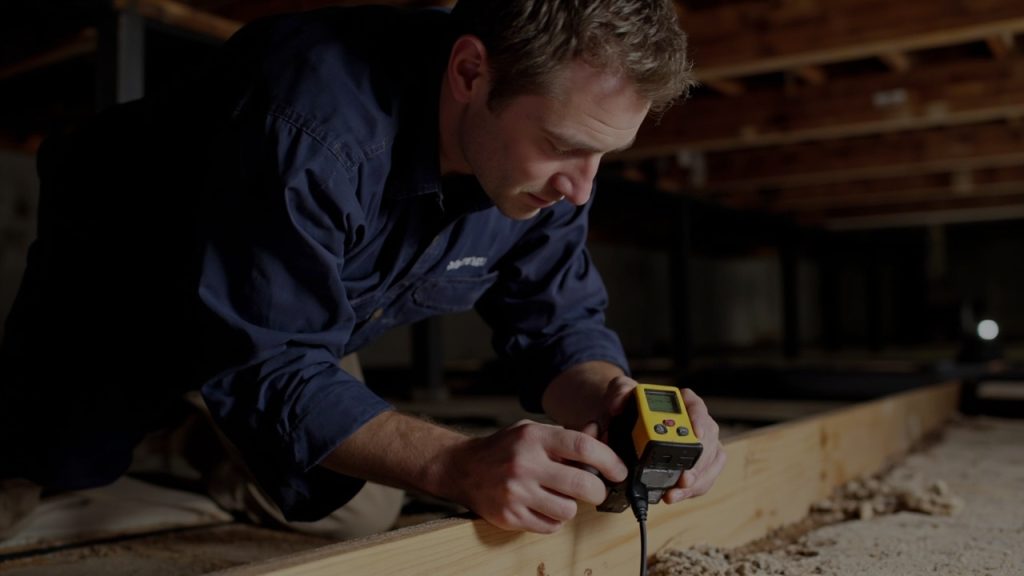
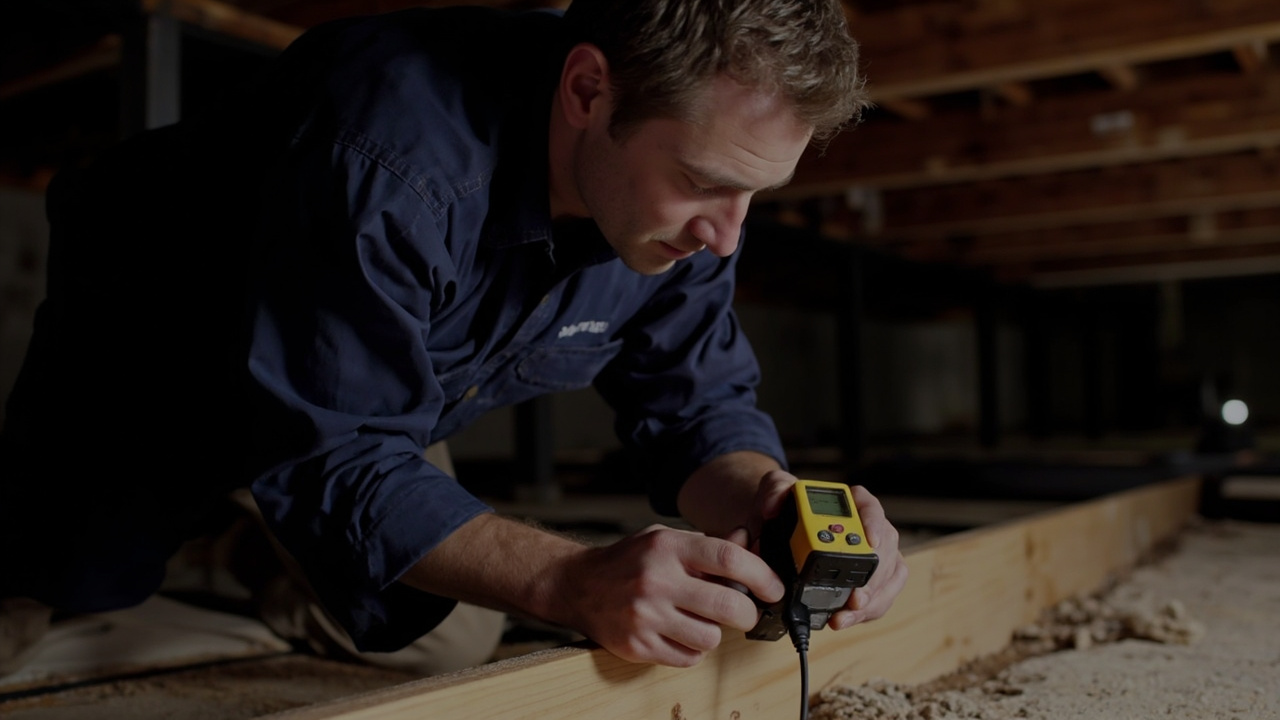
Mandeville has an average relative humidity that stays above 70 percent for much of the year. When you add standing water under a home, the humidity in the crawl space hits 90 percent or higher. Wood begins to rot when its moisture content stays above 19 percent for an extended period. Most floor joists in Northshore homes should have a moisture content between 10 and 14 percent. Professional restorers use moisture meters to track these levels daily. If the wood feels soft or looks dark, the decay process has started.
Fungal growth is another major concern. Mold spores thrive in the dark, damp conditions under your home. These spores can enter your living space through the stack effect. This is a natural process where warm air rises and pulls air from the crawl space into your home through floor gaps and utility penetrations. If you are managing a historic home with these issues, you might find our insights on professional mold remediation and preservation for Garden District historic mansions helpful for understanding the preservation of old wood.
Professional drying and the science of psychrometry
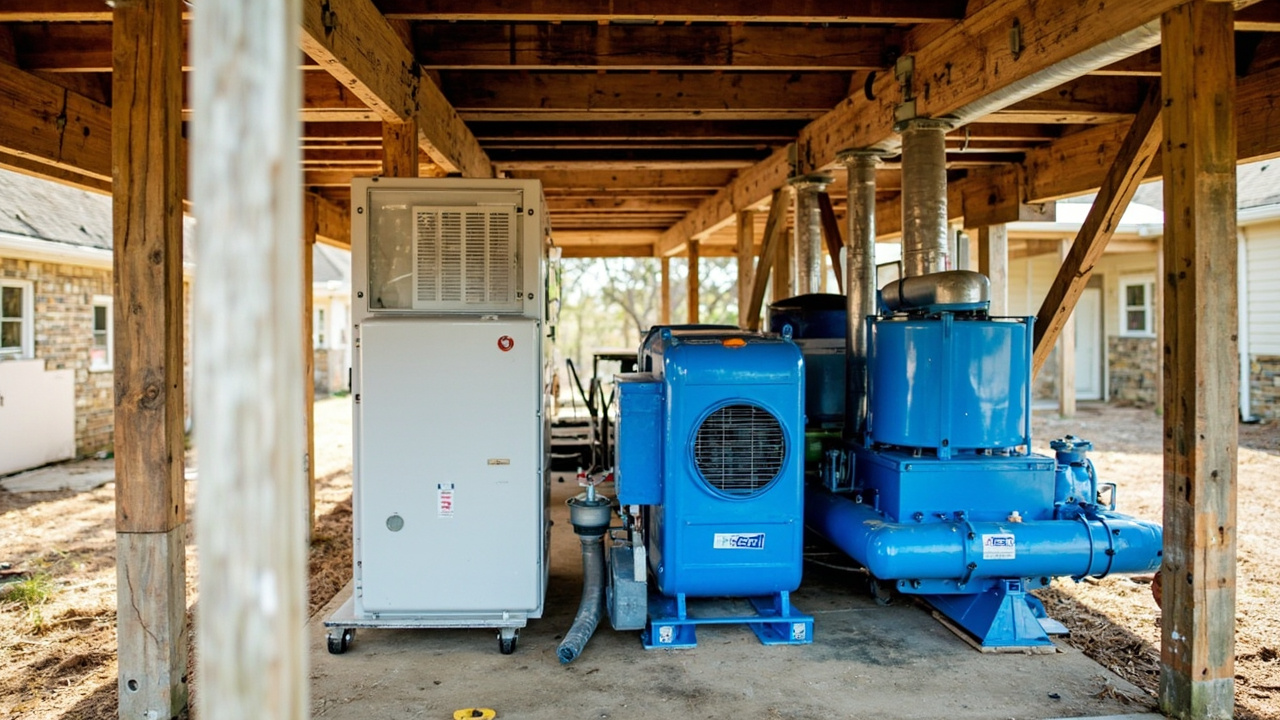
Drying a crawl space requires more than just a few fans. We use the science of psychrometry to manage the relationship between temperature, humidity, and air pressure. In 2026, we use Low Grain Refrigerant (LGR) dehumidifiers. These machines are much more powerful than the units you buy at a hardware store. They can pull moisture out of the air even when the humidity levels are already low. This creates a vapor pressure differential that sucks moisture out of the wood joists and into the air where it can be collected.
We also use high-velocity air movers. We position these fans to create a continuous vortex of air across the wet surfaces. This breaks the boundary layer of saturated air that sits on the surface of the wood. Without this airflow, the wood will stay wet even if the air in the center of the crawl space is dry. We monitor the grains per pound (GPP) of the air to ensure the drying environment is optimal. This is a technical measurement of the weight of water vapor in the air. If the GPP is not dropping, the crawl space is not drying.
Current Crawl Space Drying Equipment Standards 2026
| Equipment Type | Function | Mandeville Soil Application |
|---|---|---|
| LGR Dehumidifier | Removes water vapor at low GPP | Essential for high-humidity Northshore environments |
| Axial Air Mover | High-volume airflow across surfaces | Required for drying long floor joists |
| HEPA Air Scrubber | Filters mold spores and odors | Critical when fungal growth is present |
| Submersible Sump Pump | Extracts standing bulk water | Used when water is over 1 inch deep |
Steps to take while waiting for a restoration team
If you are waiting for a professional crew, you can take some preliminary steps. Do not enter the crawl space if there is standing water and your electricity is still on. Electrocution is a real risk. If it is safe, you should turn off the power to the under-home circuits. You can also clear debris from around the crawl space vents. Many homeowners in neighborhoods like Chafunkta or Fontainebleau have landscaping that blocks these vents. Clearing them allows for at least some natural air movement.
Do not try to pump the water out yourself with a standard shop vacuum. These tools are not meant for continuous use in muddy conditions. They also do not have the filtration needed to prevent the spread of contaminants. If you see signs of water damage in your main living areas, especially in kitchens or bathrooms, you may need a different approach. Residents in other parts of the city often face similar issues, such as the emergency kitchen flood response in Uptown New Orleans which requires immediate extraction to save cabinetry.
Long term moisture control and encapsulation
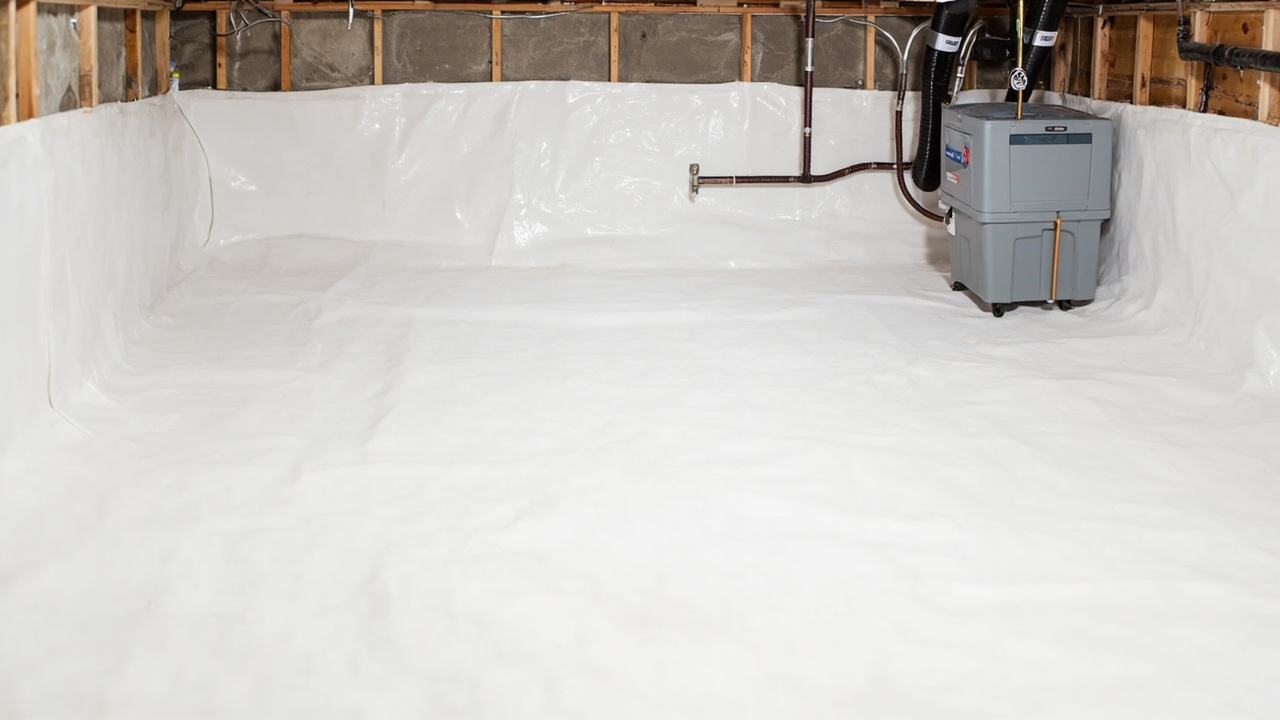
Once the crawl space is dry, you must prevent the problem from returning. A standard vapor barrier is a 6-mil plastic sheet that covers the ground. In 2026, we recommend a full encapsulation. This involves using a 20-mil reinforced liner that covers the floor and the walls of the crawl space. We seal every seam with waterproof tape. This creates a permanent barrier between the damp soil and your home. This is especially important for residents in low-lying areas near the lakefront.
An encapsulated crawl space also needs a dedicated dehumidifier. This unit stays in the crawl space and runs automatically whenever the humidity rises above 55 percent. This prevents the wood from ever reaching the point where mold can grow. For those in the West Bank who might be dealing with existing issues, you can learn more about professional black mold removal for homes in Algiers to see how we handle extreme cases of neglect. Encapsulation is the best way to avoid these expensive remediation costs.
Restoration Timeline for Saturated Crawl Spaces
| Phase | Estimated Duration | Key Actions |
|---|---|---|
| Inspection and Mapping | 2 to 4 Hours | Thermal imaging and moisture readings |
| Water Extraction | 4 to 8 Hours | Pumping out standing water and sludge |
| Structural Drying | 3 to 5 Days | Continuous LGR dehumidification and airflow |
| Antimicrobial Treatment | 1 Day | Fogging or wiping joists to prevent mold |
Professional moisture detection technology
We do not guess when a crawl space is dry. We use advanced technology to verify our work. Infrared cameras allow us to see temperature differences that indicate trapped moisture behind insulation or inside masonry. These cameras are standard in our 2026 toolkits. If a joist looks dry but is cold on the thermal scan, it still contains water. We also use penetrating and non-penetrating moisture meters. The penetrating meters have pins that we push into the wood to get a reading of the core moisture content. This is the only way to be sure the center of the beam is dry.
For homeowners in Lakeview who have faced similar flood challenges, the process is very familiar. You can read about the quick response water damage restoration for Lakeview homeowners in New Orleans to see how we apply these same technologies to slab-on-grade and raised foundation homes. In Mandeville, the goal is always to get the moisture content of the wood back to a safe level as quickly as possible.
Maintenance checklist for Mandeville homeowners
To keep your crawl space dry throughout the 2026 storm season, follow this maintenance list. Regular checks can save you thousands of dollars in restoration costs. According to the FEMA guidelines for flood-prone areas, maintaining proper drainage is the first line of defense for any home foundation.
- Check your crawl space vents for blockages every three months.
- Inspect the ground under your home for any new damp spots or puddles.
- Ensure your yard is graded so water flows away from the foundation.
- Clean your gutters and check for leaks in the downspout extensions.
- Look for signs of termites or wood-boring insects which are attracted to damp wood.
- Monitor the humidity in your home for any sudden increases or musty odors.
The impact of humidity on indoor air quality
Your crawl space is the lungs of your home. If the air under your house is contaminated with mold spores or high humidity, your indoor air quality will suffer. This is a significant health concern for families in Mandeville. Many people suffer from unexplained allergies or respiratory issues because of a wet crawl space. By drying the area and installing a vapor barrier, you improve the air you breathe every day. The IICRC provides standards for professional drying that focus on both structural safety and health. We follow these S500 standards on every job we perform in St. Tammany Parish.
If you find that your crawl space is not drying out after a storm, do not wait for the wood to start rotting. The damage will only get worse as the Northshore heat increases. Contact a professional restoration team that understands the specific challenges of Mandeville soil and humidity. We have the industrial equipment and technical expertise to dry your foundation and protect your home for years to come. Reach out to us today to schedule a comprehensive moisture inspection for your property.