Living in the Seventh Ward of New Orleans means managing a unique relationship with water. This historic neighborhood sits on a combination of river sediment and heavy clay that retains moisture long after the rain stops. Many homes here feature the classic pier and beam foundation. This architectural style allows air to circulate under the house but it also creates a pocket where humidity and groundwater can cause significant structural damage. When the space under your home stays wet for too long the results include wood rot and pest infestations. Professional restoration standards in 2026 focus on controlling the environment rather than just moving air around.
The Seventh Ward sits near areas like St. Claude and the Frenchmen Street corridor where the water table remains high. This proximity to the river and the low elevation of the city means that moisture often migrates upward through the soil. This process is called capillary action. If your crawl space feels damp or smells musty it indicates that the evaporation rate of the ground is higher than the rate at which the moisture can escape. In our current 2026 climate we see higher humidity peaks that require more than just standard floor fans to manage. Residents near North Broad Street and Esplanade Avenue face the same challenges due to the dense Sharkey clay soil found throughout the area.
How to dry out the crawl space under your Seventh Ward pier and beam house
To dry the area effectively we must lower the vapor pressure in the crawl space. When the vapor pressure in the air is lower than the vapor pressure in the wet wood the moisture will move out of the wood and into the air. We then use dehumidifiers to remove that moisture from the air. Without this cycle the wood stays saturated and becomes a breeding ground for organisms like Poria incrassata which is an aggressive wood rotting fungus prevalent in the Gulf South. If you have already noticed signs of moisture spreading upward into your living areas you may need to look into professional water damage restoration services for your specific neighborhood.
The drying process starts with identifying the source of the water. In the Seventh Ward this is often a combination of groundwater seepage and high atmospheric humidity. You must first ensure that no liquid water is sitting on the soil. Standing water increases the humidity levels to 100 percent making it impossible for the wood to release its moisture. Use a submersible pump or a high volume wet vacuum to clear any pools of water. Once the liquid is gone you can focus on the air quality and the moisture content of the structural members.
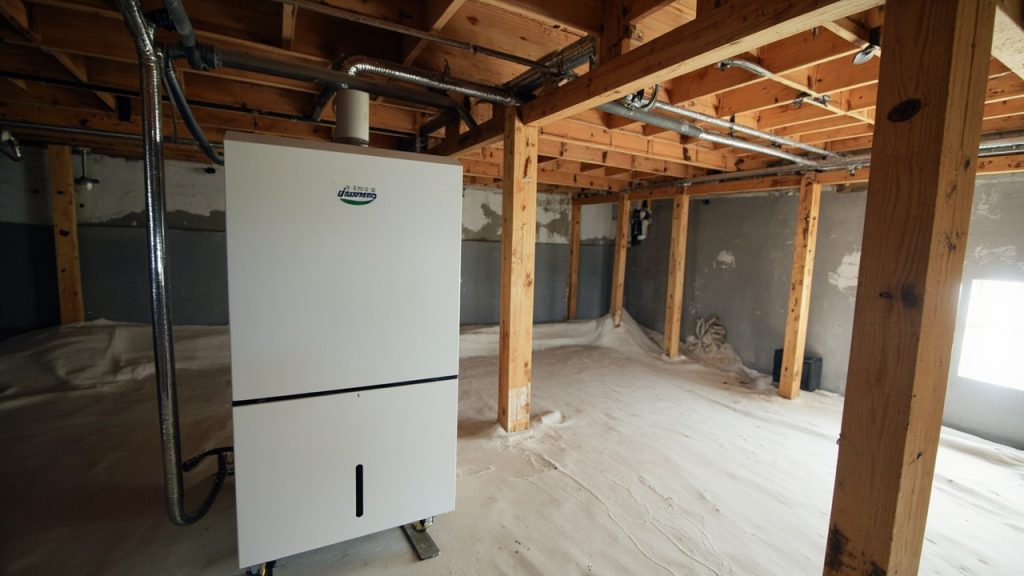
The 2026 approach to drying involves high capacity Low Grain Refrigerant dehumidifiers. These machines are far more effective than standard household units. They can lower the grains of moisture per pound of air to a level where evaporation happens quickly. You also need high velocity air movers. These are not standard fans. They are engineered to move air in a specific pattern that breaks the boundary layer of air on the surface of the wood. This allows the dry air to pull moisture out of the grain of the cypress or pine beams.
Architectural history and moisture in the Seventh Ward
The Seventh Ward possesses a rich architectural heritage that directly impacts how moisture behaves under your home. Founded as a suburb for the city’s free people of color the neighborhood features a mix of Creole cottages and Victorian shotguns. These structures were built with native cypress because of its natural resistance to rot. But even cypress has limits when exposed to the constant saturation found in the current New Orleans environment. The original builders understood the swampy terrain and used brick piers to elevate the living spaces above the damp earth. This design was a response to the frequent street flooding and the high humidity of the Gulf South.
Over the decades the ground level in the Seventh Ward has shifted. Modern paving and changes in local drainage have altered how water pools around these historic piers. Many homes that once had clear airflow now have obstructed crawl spaces due to added skirting or landscaping. The soil in this area is primarily Sharkey clay which expands when wet and shrinks when dry. This movement can create cracks in brick piers and allow even more moisture to seep into the foundation. Understanding the specific history of your Seventh Ward property helps you identify whether your moisture issues stem from original design choices or modern environmental changes. Preserving these homes requires a balance of historic materials and current technology.
Many homeowners near A.P. Tureaud Avenue have found that their original brick piers are absorbing water like a sponge. This is known as rising damp. When the brick stays wet it transfers that moisture directly into the wooden sills of the house. In 2026 we address this by installing physical barriers between the brick and the wood. This prevents the moisture from traveling upward into the structure. You must check your piers for soft mortar or crumbling bricks. If the mortar is failing it allows even more water to penetrate the core of the foundation.
The physics of drying a New Orleans crawl space
Drying a pier and beam foundation requires an understanding of psychrometry. This is the science of how air and water vapor behave. In New Orleans the outdoor humidity often exceeds 80 percent. If you simply open the vents under your house you are bringing in wet air that will condense on the cooler surfaces of your floor joists. This is a common mistake that leads to localized wood decay. Professional restorers use the IICRC S500 standards to determine the correct drying protocol. These standards ensure that the drying process is measurable and repeatable.
The relationship between temperature and humidity is vital. Warm air holds more water than cold air. If you increase the temperature in the crawl space without removing the moisture you increase the risk of mold growth. This is why we focus on dehumidification rather than just heating. We look at the Dew Point of the air under your house. If the temperature of your wood beams is below the dew point of the air condensation will form. This happens frequently in the summer months when your air conditioner is running. Your floors stay cool and the humid New Orleans air hits that cool surface and turns into water.
By using 2026 technology we can track these variables in real time. We calculate the Grains Per Pound (GPP) of the air. This is a measure of the actual weight of the water in the air. We want the GPP in the crawl space to be lower than the GPP of the outdoor air. This creates a drying environment. If the GPP inside is higher than outside you are effectively adding water to your house. This scientific approach ensures that we are not just moving wet air around but actually removing the water from the structure.
Measuring moisture content in structural members
We do not guess when a crawl space is dry. We use moisture meters to test the Wood Moisture Content of the floor joists and the subfloor. In the Seventh Ward we aim for a Wood Moisture Content below 16 percent. Anything above 20 percent allows for the growth of wood decaying fungi. During a typical restoration job in 2026 we monitor these levels daily. We also track the grain per pound of the air to ensure the dehumidifiers are performing at peak efficiency. This technical approach prevents the return of mold after the equipment is removed.
| Wood Moisture Content Percentage | Risk Level for New Orleans Homes | Required Action |
|---|---|---|
| 9 percent to 12 percent | Safe Range | Maintain current ventilation or encapsulation |
| 13 percent to 16 percent | Caution Range | Monitor for seasonal humidity changes |
| 17 percent to 19 percent | High Risk | Install active dehumidification immediately |
| 20 percent and above | Active Decay | Professional structural drying and antimicrobial treatment |
We take readings from multiple points under the house. The wood nearest the perimeter often dries faster than the wood in the center. We also check the moisture content of the masonry piers. Bricks hold a significant amount of water and can take longer to dry than the wood. If we remove the equipment before the bricks are dry the moisture will migrate back into the wood. This is called the rebound effect. Our 2026 protocols require three consecutive days of stable dry readings before we consider the job complete.
Testing the subfloor is also critical. In many Seventh Ward homes the subfloor is made of tongue and groove boards. These boards can trap moisture in the joints. We use non-invasive moisture meters to check these areas without damaging the historic wood. If the subfloor remains wet it can cause the finished hardwood floors in your living room to warp or cup. This is a common issue for residents near the Lafitte Greenway where the soil remains saturated for long periods.
Using 2026 remote monitoring technology
The equipment used to dry homes has improved significantly by 2026. Low Grain Refrigerant dehumidifiers are now the standard for restoration professionals. These machines can remove water from the air even when the humidity levels are already low. This is vital for the final stages of drying when you are trying to pull that last bit of moisture out of deep structural beams. Modern systems now include 5G enabled sensors that stay in the crawl space throughout the drying process. These sensors feed data directly to a central hub that updates a smartphone app in real time.
Homeowners can now monitor their crawl space environment without ever going under the house. The app displays the relative humidity and the specific humidity of the air. It also alerts you if the dehumidifier loses power or if the condensation pump fails. This technology allows for predictive drying. The software analyzes the current rate of evaporation and estimates the amount of time remaining until the wood reaches the target moisture content. This precision saves money by reducing the amount of time that heavy equipment needs to run. It also provides a permanent digital record of the drying process which is useful for insurance claims and home inspections.
These sensors are placed in the most problematic areas of the foundation. We usually place one near the center of the house and one near the windward side. We also place a sensor outside to compare the crawl space data with the current local weather. This allows us to see if your foundation is being affected by exterior humidity or if the moisture is coming from a plumbing leak. In 2026 we can even integrate these sensors with your home automation system to trigger a backup dehumidifier if levels rise during a heavy rainstorm.
Steps to dry out a flooded or damp crawl space
If you find standing water under your pier and beam home you must act quickly. Stagnant water under a house creates a massive humidity load that can buckle hardwood floors in the rooms above. This is especially true in historic homes where the original cypress floors are porous. If the water involves sewage from a backup or street flooding you must prioritize safety. You should seek guidance on handling biohazards from professional sewage cleanup teams in the metro area. Always wear personal protective equipment if you must enter a damp crawl space.
- Remove all standing water using submersible pumps or high volume extractors.
- Clear out any debris or wet insulation that is holding moisture against the wood beams.
- Apply an EPA registered antimicrobial agent to the wood to prevent mold spores from colonizing.
- Install high capacity Low Grain Refrigerant dehumidifiers to pull moisture out of the air.
- Position air movers to create a vortex of airflow that encourages evaporation from the wood surfaces.
- Seal the perimeter vents temporarily to prevent humid New Orleans air from entering the drying zone.
- Monitor the Wood Moisture Content until all readings reach the dry standard for the area.
- Inspect the plumbing for any secondary leaks that may have contributed to the moisture.
- Ensure that all condensate from the dehumidifiers is pumped far away from the foundation.
The removal of wet insulation is a step many homeowners skip. In the Seventh Ward fiberglass batts are often used under the floors. This material acts like a sponge when it gets wet. It also becomes heavy and sags pulling away from the floor and creating a gap where mold can grow unseen. In 2026 we recommend replacing wet fiberglass with closed cell spray foam or mineral wool which do not absorb water in the same way. Keeping the wood surfaces clear during the drying process is the only way to ensure the moisture is truly gone.
The difference between encapsulation and passive ventilation
For decades people believed that more vents meant a drier house. In 2026 we know that passive ventilation often fails in the Seventh Ward. When the air outside is 90 degrees with 90 percent humidity it cannot dry anything. Encapsulation is a more modern solution. This involves covering the ground with a heavy vapor barrier and sealing the vents. This separates the house from the wet earth. By controlling the environment under the house you reduce the workload on your HVAC system and protect the structural integrity of the piers.
Encapsulation is particularly effective for historic properties. Many homes in the Seventh Ward share architectural traits with those in the Garden District. Protecting the wood from the bottom up is the best way to ensure the home lasts for another century. A properly encapsulated crawl space stays dry regardless of the weather outside. This prevents the seasonal expansion and contraction of wood floors that many Seventh Ward residents accept as a normal part of life. You can learn more about local building science through resources at the LSU AgCenter.
When you encapsulate you are essentially turning your crawl space into a conditioned part of your home. This stops the stack effect where air is pulled from the ground up through your living space. This also improves your indoor air quality by preventing mold spores and soil gases from entering your home. In the 2026 real estate market an encapsulated crawl space is a major selling point for Seventh Ward houses. It shows that the owner has taken proactive steps to prevent rot and termite damage.
DIY vs Professional moisture control comparison
Deciding between a DIY approach and professional intervention depends on the current state of your foundation. A DIY project typically involves purchasing a vapor barrier and a consumer grade dehumidifier. While this is less expensive it often lacks the precision of a professional setup. Homeowners often struggle to achieve a perfect seal around the irregular brick piers common in the Seventh Ward. If the seal is not airtight moisture will continue to bypass the barrier and saturate the floor joists.
Professional encapsulation involves industrial materials like 20 mil reinforced liners and high capacity dehumidifiers with internal pumps. These systems are designed to last for decades without maintenance. Professionals also have access to antimicrobial coatings that are not available to the general public. These coatings provide a secondary layer of protection against mold growth. While the professional option involves a higher initial investment it typically increases the resale value of the home and provides documented proof of moisture control for future buyers.
| Comparison Factor | DIY Approach | Professional Service |
|---|---|---|
| Equipment Power | Low to Moderate | High Industrial Grade |
| Material Durability | Standard Polyethylene | Reinforced 20 mil Vapor Barrier |
| Monitoring Tech | Basic Hygrometers | Remote 5G Sensor Network |
| Sealing Method | Standard Tape | Mechanical Fasteners and Spray Foam |
| Cost Profile | Lower Material Cost | Investment for Long Term Value |
Professional services also include a structural assessment. A trained technician can spot the early signs of wood rot or pier settlement that a homeowner might miss. In New Orleans the ground is constantly moving. A professional can determine if your moisture issues are being caused by a shift in the local drainage patterns. They also ensure that the installation meets the New Orleans safety and building codes which is essential for maintaining your home insurance coverage in 2026.
Common signs of crawl space moisture in your living area
You do not always have to crawl under the house to know there is a problem. The house will tell you. One of the first signs is the cupping of floorboards. If the edges of your hardwood planks are higher than the center it means the bottom of the wood is wetter than the top. You might also notice a heavy musty odor that gets stronger when the air conditioner runs. This is because the HVAC system creates a slight negative pressure that pulls air up from the crawl space through small gaps in the floor. If you are seeing these signs in other parts of the city you should check for localized help immediately.
Another major concern in 2026 is the Formosan termite. These pests are attracted to wet wood. A damp crawl space is an invitation for a colony to establish itself. By drying out your pier and beam foundation you are making your home less attractive to these destructive insects. Keeping the wood dry is a form of pest control that many homeowners overlook. If you have experienced a flood in your kitchen the moisture can travel down through the cabinet bases into the subfloor making the crawl space even wetter. In those instances it is wise to follow an emergency response plan to stop the damage at the source.
Look for peeling paint or wallpaper near the floorboards. This is often a sign that moisture is migrating up through the wall studs. You may also see soft spots in the floor or doors that suddenly stick in their frames. These are indicators that the wood is swelling due to high moisture content. In the Seventh Ward where many homes are close together you should also check to see if your neighbor’s drainage is contributing to your crawl space issues. Water from a neighbor’s downspout can easily travel through the porous soil and end up under your house.
Long term maintenance for Seventh Ward foundations
Once the crawl space is dry the work is not finished. Maintenance is required to keep it that way. Ensure that your gutters are clean and that the downspouts carry water at least six feet away from the foundation. In the Seventh Ward the soil often sinks over time creating low spots where water can pool against the piers. You may need to add soil to grade the ground away from the house. Check your plumbing for small leaks regularly. A tiny drip from a bathroom pipe can keep a large section of the crawl space wet enough to cause rot over several months.
Homeowners should perform a visual inspection of their crawl space twice a year. Look for signs of moisture on the piers or sagging insulation. If you have a remote monitoring system check the app monthly to ensure the humidity levels remain within the safe range. Any sudden spike in humidity usually indicates a new plumbing leak or a failure in the vapor barrier. Catching these issues early prevents expensive structural repairs. The high clay content of the Seventh Ward soil means that water does not drain quickly so you must be proactive in your management strategy.
You should also keep an eye on the vents. If you have not encapsulated ensure that the vents are not blocked by plants or storage boxes. Airflow is your only defense in a non-encapsulated system. But if you have encapsulated check the condition of the tape and fasteners. Over time the humidity can cause adhesives to fail. A quick inspection once every six months can save you from a major restoration project later. In 2026 staying ahead of the water is the only way to preserve a historic New Orleans home.
Drying out the space under your Seventh Ward home is a technical process that requires the right tools and knowledge. The combination of high humidity and the specific geology of New Orleans makes this a challenge for any property owner. By focusing on vapor pressure and wood moisture content you can protect your investment and ensure your home remains structurally sound for years to come. If you suspect that your crawl space is holding onto too much water the best time to act is before the next major rain event hits the city. Contact a local restoration professional today to schedule a moisture inspection and protect your historic home from the ground up.