New Orleans office managers face a unique set of challenges when the Mississippi River or the city drainage system overflows into the Central Business District. The smell of river water and the thick muck it leaves behind are more than just an inconvenience. These elements represent a significant threat to your business operations, air quality, and the structural integrity of your high rise or historic office space. When muck enters a lobby on Poydras Street or a basement in the Warehouse District, the clock starts ticking immediately. You need a response that understands the specific environmental factors of the 70130 and 70112 zip codes. This is not just water. It is a mix of silt, organic matter, and urban runoff that requires professional intervention to ensure your staff can safely return to work.
Immediate action is the only way to prevent the pungent, earthy smell of the river from becoming a permanent fixture in your office carpets and drywall. The humidity in New Orleans in 2026 remains a primary obstacle. Without industrial grade intervention, a small amount of moisture becomes a breeding ground for bacteria within hours. Professional teams specialize in commercial restoration that focuses on business continuity. Every hour your office remains closed translates to lost revenue and disrupted client services. You can find more about industry standards for these situations at the IICRC website.
Immediate Action for CBD Water Damage
The first sixty minutes after a water intrusion are the most important. In the CBD, water often brings in fine river silt that settles into the pores of concrete and the fibers of commercial grade carpets. This muck contains microorganisms that thrive in the warm, damp climate of South Louisiana. If you wait more than twenty four hours to begin the extraction process, the odor will penetrate the HVAC system and spread to every floor of the building. Rapid response is required for offices near the Superdome and the various hotels along Canal Street to stop the spread of these odors. For urgent situations, you should contact a team for emergency water extraction immediately.
The process begins with heavy duty extraction. Technicians use truck mounted vacuum systems that pull hundreds of gallons of water and sludge per hour. This is much more effective than the standard wet dry vacuums used by janitorial staff. For those located in the dense urban core, compact high powered units can reach upper floor suites without losing suction. Once the standing water and muck are gone, the focus shifts to the microscopic level. You must address the bacteria that cause the lingering river smell. This involves the use of specialized antimicrobial agents that are safe for commercial environments.
Psychrometry and Advanced Moisture Mapping in 2026
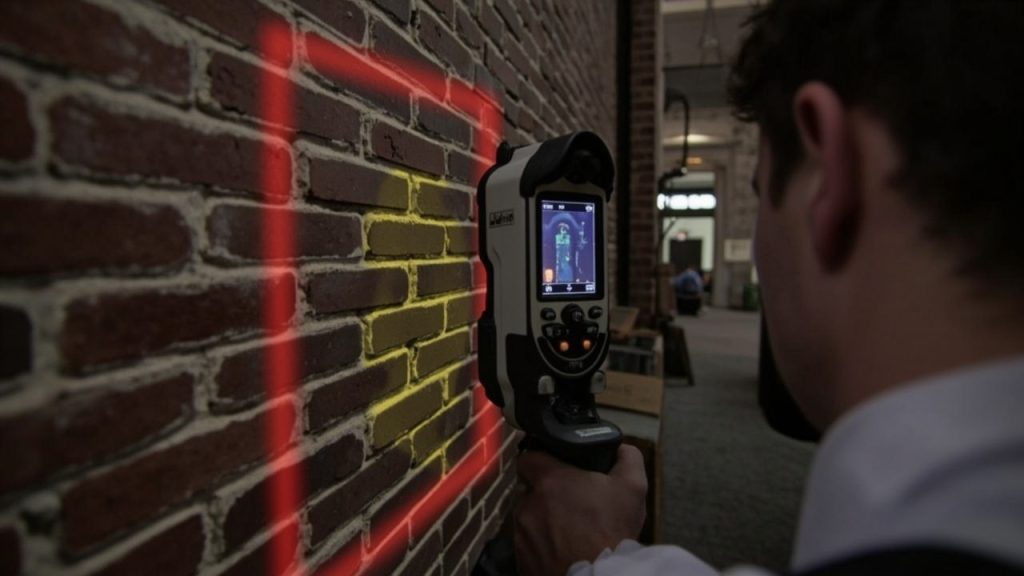
Drying an office in a high rise building requires an understanding of psychrometry. This field focuses on the thermodynamic properties of gas and vapor mixtures. In 2026, restoration professionals use the latest sensors to monitor the moisture content of materials behind the walls. We no longer rely on simple surface checks. Technicians utilize the FLIR T-series thermal imaging systems with AI moisture mapping to see through drywall and insulation. These tools identify pockets of trapped river water that the human eye cannot see.
The current standard for 2026 involves the use of the Phoenix DryMax XL 2026 Edition LGR dehumidifier. These machines are optimized for the extreme humidity found in the New Orleans metro area. They pull moisture from the air even at low grain levels. This is vital because the Mississippi River carries a high level of dissolved solids. These solids hold onto moisture through a process called hygroscopy. If you do not reach a specific grain per pound measurement in the air, the muck smell will remain trapped in the building materials. Specialists track these metrics daily to ensure the environment is reaching the dry goal. This level of precision is critical for preventing the need for commercial mold remediation later.
Specific Case Studies in Iconic CBD Buildings
Consider a hypothetical scenario at the Hancock Whitney Center on Poydras Street. A major drainage backup during a tropical event pushes three inches of muck into the ground floor lobby. The marble floors are non-porous, but the decorative wood paneling and elevator tracks are at high risk. In this situation, the restoration team must use specialized silt scrapers to remove the bulk of the river solids before the silt dries and becomes airborne dust. They then implement a negative pressure system to keep odors from rising through the elevator shafts to the upper fifty floors. This prevents a localized event from affecting every tenant in the building.
Another scenario involves the historic Warehouse District buildings near Julia Street. These structures often feature exposed brick and heart of pine timbers. When the river rises and enters these spaces, the porous brick absorbs the contaminants. A standard cleaning fails here. Professionals must use low pressure media blasting with bicarbonate of soda to pull the river muck out of the brick pores without damaging the historic substrate. This preserves the aesthetic of the office while eliminating the source of the river smell at the molecular level. These specific local challenges require a deep understanding of New Orleans architecture. 
Identifying the Source of the River Smell
River water is categorized as Category 3 water, also known as black water. This classification means the water is grossly unsanitary and can cause illness if handled incorrectly. According to the Environmental Protection Agency, flood water and river overflow carry various pathogens and pollutants. The smell you recognize as muck is the off gassing of decomposing organic matter. In a confined office environment, these gases become trapped and recirculated. This is why a simple cleaning is never enough. You must treat the source of the odor at a molecular level.
For businesses that also have operations in residential areas, similar expertise is required. In the CBD, however, the sheer volume of material used in commercial construction requires different drying protocols than a residential home. High rise buildings have complex interstitial spaces where air can stagnate, making odor removal more difficult. The concrete slabs and steel beams can conduct moisture in ways that traditional wood framing does not. This is why commercial expertise is vital for a successful outcome in 2026.
Comparison of Commercial Restoration Response Times
| Service Level | Arrival Time | Equipment Used | Best For |
|---|---|---|---|
| Emergency Response | Under 60 Minutes | Truck Mount Extractors | Major Floods and Pipe Bursts |
| Standard Response | 2 to 4 Hours | Portable Extractors | Minor Leaks and Seepage |
| Consultation | Same Day | Moisture Meters and Cameras | Post Clean Up Inspection |
The Physical Hazards of Mississippi River Muck
Muck is not just dirt. In the New Orleans CBD, muck is a slurry of Mississippi River silt, decaying plant matter, and urban debris. When it dries, it turns into a fine dust that can enter the office air filtration system. This dust carries the same odors and bacteria as the wet muck. This is why specialists prioritize muck removal while it is still damp. Technicians use specialized scrapers and HEPA filtered vacuums to ensure no residue is left behind. This prevents the spread of secondary contaminants throughout the ventilation system. 
Historic buildings in the Warehouse District face additional risks. These buildings often have original wood timbers that are highly absorbent. If you are dealing with a historic property, the techniques for preserving materials are very specific. Silt can become trapped in the gaps of original hardwood flooring, leading to floor cupping and permanent odor issues. Every crack must be cleaned and treated with an antimicrobial solution designed for porous surfaces. This ensures the 2026 air quality standards are met for all occupants.
Odor Neutralization Technology for 2026
Once the muck is removed and the space is dry, the final step is odor neutralization. Restoration teams do not use scented sprays to mask the smell. Masking agents only provide temporary relief. Instead, they use technology that breaks down the odor molecules. The two most common methods are hydroxyl generators and ozone machines. For an active office space, hydroxyl generators are often the best choice because they can be used while people are in the building. Ozone machines are more aggressive but require the space to be empty during treatment.
Comparison of Odor Removal Technologies
| Technology | Operation Method | Safety Profile | Timeframe |
|---|---|---|---|
| Hydroxyl Generators | UV Light Technology | Safe for Occupied Spaces | 24 to 72 Hours |
| Ozone Machines | Controlled Ozone Gas | Unoccupied Spaces Only | 12 to 24 Hours |
| HEPA Air Scrubbers | Mechanical Filtration | Safe for Occupied Spaces | Continuous During Work |
The choice between these technologies depends on your specific needs. If you need to keep your staff working on Poydras Street during the restoration, the team will set up a containment area and use hydroxyl generators. If the office can be closed for a weekend, ozone may be more efficient. The goal is to ensure that by Monday morning, there is no trace of the river in your air quality. Technicians also clean the coils of your HVAC system, as these often trap river odors and redistribute them throughout the floor.
Coordinating with Insurance and Property Management
Commercial water damage restoration in the CBD involves more than just cleaning. It requires careful coordination with property managers and insurance adjusters. Professional firms provide the detailed documentation required for business interruption claims. This includes moisture maps, infrared photos showing the extent of the water spread, and a detailed log of all equipment used. Technicians follow the IICRC S500 Standard for Professional Water Damage Restoration to ensure all work meets industry requirements.
Property managers in the CBD have strict rules for vendors. Crews are familiar with the loading dock requirements and elevator schedules for major office towers like the Pan American Life Center. They work within these constraints to minimize the impact on other tenants in the building. If the damage involves a shared drainage line or a sewage backup, the restoration plan must account for the entire plumbing stack to ensure no cross contamination occurs.
Documentation Checklist for Office Insurance Claims
- Photos of all standing water and muck before removal begins.
- A list of all damaged office electronics and furniture.
- Daily moisture readings of walls and floors to prove the drying progress.
- Invoices for emergency services to prevent further damage.
- Records of any relocated staff or temporary office rentals.
Restoring Air Quality in the Warehouse District
The Warehouse District presents unique air quality challenges due to the high ceilings and open floor plans of many offices. When river water enters these large spaces, the odors can dissipate slowly. Technicians use high velocity air movers to create a vortex of airflow that pushes the stagnant, smelly air toward HEPA scrubbers. This process removes the physical particles of muck that have become airborne as the area dries. This is critical for preventing the spread of mold spores that thrive in the South Louisiana heat.
In cases where the water has affected a breakroom or a kitchen area, the risk of mold is even higher. Ensuring that food prep areas are sanitized and free of river contaminants is a top priority for workplace safety. Technicians use hospital grade disinfectants that are approved for food contact surfaces to ensure the kitchen is safe for employee use. This level of detail is necessary to meet current 2026 health and safety standards for New Orleans businesses. These steps prevent the lingering smell of river muck from returning during the next high humidity event.
Addressing Silt and Sediment in Commercial HVAC Systems
One often overlooked aspect of removing the smell of river water and muck from your CBD office space is the HVAC system. Air handling units located on lower levels can pull in odors and fine particulate matter from the river muck. This creates a cycle where the smell is redistributed throughout the building even after the floors are clean. Specialists must inspect the ductwork for any signs of sediment buildup. If the river muck has reached the internal components of the system, a full industrial cleaning is required.
In 2026, air quality monitoring is a standard part of the restoration process. Sensors placed throughout the office track the levels of volatile organic compounds and particulate matter. This data provides proof that the air is safe for employees. For high occupancy buildings on Canal Street, this documentation is essential for liability management. The goal is to return the office to its pre loss condition without leaving any hidden hazards behind.
The Chemistry of Mississippi River Silt
Understanding the chemistry of the silt is vital for effective removal. Mississippi River silt is composed of fine minerals and organic matter from across the country. It also contains agricultural runoff from the Midwest and industrial residues from the corridor between Baton Rouge and New Orleans. When this silt dries inside your office, it binds to surfaces like a cementitious material. This makes it much harder to remove if you delay the cleaning process. 
The organic components of the silt are what produce the characteristic river smell. These components begin to decay as soon as they are removed from the oxygen rich environment of the flowing river. In the stagnant air of a CBD office, this decay accelerates. Professional restoration teams use enzymatic cleaners that specifically target these organic compounds. This breaks down the odor at the source rather than just covering it up. This technical approach is the only way to ensure the smell does not return when the building heat or humidity rises.
Protecting Commercial Electronics from Muck Dust
Muck is not just a threat to your floors and walls. It also poses a risk to your office technology. As river muck dries, it becomes a fine, abrasive dust. This dust can enter server rooms and desktop computers, causing overheating and hardware failure. For offices in the 70130 area, protecting the IT infrastructure is a top priority. Restoration teams set up critical environment barriers to protect sensitive equipment while the cleaning and drying process is underway.
If your electronics have already been exposed to the river water or muck, specialized decontamination is necessary. We work with electronics restoration experts who use deionized water baths and vacuum freeze drying to salvage expensive hardware. This can save your business thousands of dollars in replacement costs and prevent the loss of critical data. Business continuity in 2026 depends on the rapid restoration of these digital assets.
Frequently Asked Questions About River Water Intrusion
What are the primary contaminants in Mississippi River water in 2026? The river carries a mixture of silt, industrial runoff, and organic waste. Specific contaminants often include heavy metals from upstream industrial sites and pathogens like E. coli or Giardia. When the river overflows into the CBD, it also picks up urban pollutants from the streets, including oils and chemicals. This makes the muck highly toxic and necessitates professional removal.
How long do I have to file an insurance claim for water damage in my CBD office? Most commercial policies require you to take immediate action to mitigate damage. You should document the intrusion and contact your carrier within 24 to 48 hours. Providing a professional moisture map and an initial assessment from a restoration firm can significantly speed up the approval process for your claim. Delays in reporting can lead to a denial of coverage if secondary damage like mold occurs.
Can the river smell be removed from commercial grade carpeting? If the water is Category 3 river water, the IICRC standards generally recommend replacement of the carpet and padding. The porous nature of carpet allows silt and bacteria to become deeply embedded. However, for minor seepage that is treated within the first few hours, professional hot water extraction with specialized antimicrobial rinses may be effective. A technician will use a moisture probe to determine if the subfloor has been compromised before making a recommendation.
Long Term Odor Prevention and Mold Mitigation
Removing the immediate smell is the first goal, but preventing the return of odors is just as important. Professionals apply antimicrobial treatments to every surface that the water touched. These treatments are safe for office environments and provide a layer of protection against future microbial growth. In a city like New Orleans, where the humidity is a constant factor in 2026, these treatments are a necessary step in any commercial restoration project.
If your business also has properties across the river, you should be aware of the specific risks in those areas. Mold can develop quickly in the humid environment of the West Bank. The goal is to maintain a healthy environment for your employees no matter where their office is located. Regular inspections of the building envelope and HVAC systems can help identify moisture issues before they turn into major odor problems. This proactive approach is the best way to handle the challenges of 2026.
Final Inspections and Business Continuity
Before a job is considered complete, the team performs a final walk through with the property manager. Technicians use thermal imaging cameras to verify that every wall and floor is dry. They also conduct air quality testing to ensure the river smell is completely gone and the bacterial levels are back to a normal range. Years of experience in the New Orleans metro area prove that a thorough final inspection is the best way to prevent future liability and ensure tenant satisfaction.
The CBD is the heart of the city economy. Keeping it clean and free of the odors associated with the Mississippi River is a priority for all local businesses. If you find muck in your lobby or the smell of the river in your hallways, contact professional restoration services immediately. The team will help you get your office back to professional standards with minimal downtime. Prompt action ensures your building remains a safe and productive environment for your staff and clients throughout 2026 and beyond.
Contact our team today to schedule an immediate assessment of your commercial office space and eliminate river odors for good.