Living in a historic home in the Esplanade Ridge neighborhood offers a unique charm that modern builds cannot replicate. Those thick plaster walls and high ceilings define the architectural beauty of New Orleans. In 2026, many homeowners still struggle with a persistent damp odor that seems to cling to the very structure of their homes. If you walk into your foyer and smell a heavy, earthy scent, you are dealing with more than just a surface issue. Plaster is a porous material that acts as a giant filter for the high humidity levels we experience in Louisiana. Understanding the science behind this material is the first step toward reclaiming your home’s fresh air. You deserve a living space that feels as clean as it looks.
Historic plaster in the 70119 and 70116 zip codes is typically made of lime, sand, and animal hair. Unlike modern drywall, this material is designed to breathe. While breathability is good for structural longevity in our tropical climate, it also means the walls absorb every molecule of moisture and organic matter from the air. When the relative humidity inside your home stays above 60 percent, those trapped organic particles begin to decay or host microbial growth. This is when the classic musty smell develops. It is not just about the age of the house. It is about the interaction between the porous lime and the current 2026 environmental conditions. New Orleans weather patterns in 2026 have shown increased moisture retention in older masonry, making this a common struggle for local residents.
Understanding why historic plaster absorbs odors
Plaster walls are not solid blocks of stone. They are filled with microscopic channels and air pockets. These channels are the result of the drying process when the plaster was originally applied. Over decades, these pockets collect dust, cooking oils, and moisture. In a high-humidity environment like New Orleans, the calcium carbonate in the plaster can hold onto these smells for years. When it rains heavily or the humidity spikes, the walls release these trapped odors back into your living space. This cycle makes the smell feel permanent, but it is actually a manageable physical process. You can break this cycle with the right tools and a bit of patience.
The lathe and plaster system also creates a hollow cavity between the interior wall and the exterior siding. This gap often lacks modern insulation. In many Esplanade Ridge homes, this void becomes a stagnant air chamber. If there is even a tiny leak in the roof or around a window frame, moisture enters this cavity. Since there is no airflow, the moisture sits against the back of the plaster. This creates a breeding ground for mold that you cannot see from the front of the wall. If you are also dealing with larger issues like emergency sewage cleanup in Metairie or surrounding areas, the odor molecules can travel through shared systems and settle into these porous walls. The air inside these cavities stays cool and damp, which is exactly what mold needs to thrive.
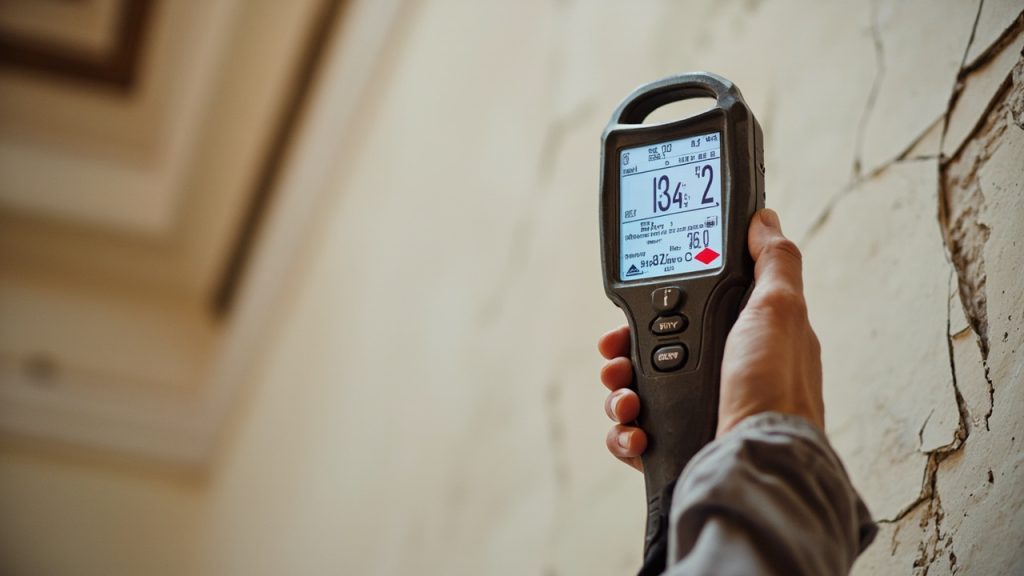
A photo of a professional technician using a high-precision digital moisture meter against a cracked plaster wall in a historic New Orleans home. The meter screen should show a high percentage reading, and the background should feature a classic Esplanade Ridge architectural detail like a ceiling rose or crown molding to establish local context.
Comparing odor retention in different wall materials
To understand why your historic home smells different than a new build, look at how different materials react to moisture and odor. This table shows how plaster compares to modern materials commonly used in 2026 renovations. This data helps you prioritize which walls need the most attention during a restoration project.
| Material Type | Porosity Level | Odor Retention Rate | Moisture Resistance |
|---|---|---|---|
| Historic Lime Plaster | High | Extreme | Moderate (Breathable) |
| Modern Gypsum Plaster | Medium | High | Low |
| Standard Drywall | Low | Medium | Very Low |
| Cement Board | Very Low | Low | High |
Identifying the source of the smell
Before you start cleaning, you must know what you are fighting. Not all smells are created equal. A sharp, ammonia-like smell usually points to pest waste behind the lathe. A thick, sweet, earthy smell almost always indicates active mold growth. A dusty, metallic smell is often just the result of efflorescence, which happens when minerals in the plaster react with moisture and migrate to the surface. In our current 2026 climate, we also see a rise in odors caused by high VOC levels trapped in old paint layers. Identifying the specific scent helps you choose the right cleaning agent for the job.
You should use a moisture meter to check the walls. A professional restoration technician uses these tools to find hidden wet spots. If the moisture content in your plaster is above 15 percent, you have an active water source that must be addressed. Cleaning the surface will not help if the back of the wall is wet. For homeowners in the Garden District or Esplanade Ridge, professional mold remediation and preservation is often necessary to protect the structural integrity of these valuable properties while removing the scent. Infrared cameras are also helpful for finding cold spots where water might be hiding behind the wood lath.
Cleaning surface odors with safe solutions
If the smell is purely on the surface, you can use specific cleaning agents. Never use bleach on plaster. Bleach is mostly water. The chlorine stays on the surface while the water soaks into the pores, which can actually feed mold growth deep inside the wall. Instead, use a solution of Trisodium Phosphate, or TSP. This is a heavy-duty cleaner that cuts through the oily films that trap odors. Wear gloves and eye protection when using TSP, as it is highly alkaline. It is the best choice for removing decades of tobacco smoke or cooking grease from lime-based finishes.
Another effective tool is white vinegar. The acetic acid in vinegar kills many mold species and neutralizes alkaline odors. Mix a one-to-one solution with distilled water and lightly mist the walls. Do not soak the plaster. Let it air dry with the help of a high-power floor fan. In the humid 2026 environment of New Orleans, you must use mechanical ventilation to ensure the walls dry quickly. If you have recently experienced a flood, such as an emergency kitchen flood response in Uptown New Orleans, you should ensure the subfloor is also dry before treating the walls. Proper airflow is your best defense against recurring odors.
Specialized cleaning products for 2026
As we move through 2026, two new categories of cleaning agents have become essential for historic home maintenance. These products go beyond traditional soaps to address odors at the molecular level. If traditional methods fail, these specialized solutions often provide the necessary results for deep-set smells in aged plaster.
The first category is Enzymatic Bio-Digesters. These solutions contain live bacteria cultures designed to consume organic matter. They are particularly effective for odors caused by pets or ancient organic debris trapped within the plaster layers. You apply the solution and let the enzymes work over several hours. They literally eat the source of the smell without damaging the delicate lime substrate. These products are non-toxic and safe for use in homes with children or pets, making them a favorite for local families in 2026.
The second category is Micellar Surfactant Solutions. These cleaners use nanotechnology to encapsulate odor molecules. When you wipe the wall with a micellar solution, the surfactants surround the microscopic oil and dirt particles, lifting them out of the plaster pores. This allows for a much deeper clean than standard detergent. It is especially useful in homes near Esplanade Ridge where years of street dust and urban pollutants have settled into the walls. Using these advanced 2026 products ensures that you are not just masking the scent but physically removing the contaminants from the lime matrix.
Step by step cleaning process for plaster walls
- Vacuum the walls using a HEPA-filter vacuum to remove loose dust and mold spores.
- Wipe the surface with a damp cloth and a TSP solution to cut through grease.
- Apply an Enzymatic Bio-Digester to areas with heavy organic smells.
- Rinse with a clean, damp cloth using distilled water to prevent mineral spots.
- Apply a light mist of vinegar and water to neutralize remaining alkaline odors.
- Run a commercial-grade dehumidifier for 48 hours to pull moisture out of the pores.
Advanced professional deodorization for deep smells
Sometimes, cleaning the surface is not enough. The odor molecules are stuck deep in the lime layers. This is when professional equipment is required. In 2026, we primarily use hydroxyl generators for occupied homes. Hydroxyls are naturally occurring molecules that break down odor-causing compounds at the molecular level. Unlike ozone, hydroxyls are safe to be around while the machine is running. This is perfect for families in Esplanade Ridge who do not want to vacate their homes during the process. These machines work by pulling in air and using ultraviolet light to create the cleansing molecules.
Thermal fogging is another option. A technician uses a fogging machine to create a fine mist of deodorizing agent that mimics the size of the odor molecules. This allows the treatment to penetrate the same microscopic pores where the smell is trapped. For residents in Algiers or Mid-City dealing with specialized issues, professional black mold removal often includes these advanced deodorization steps as part of the standard protocol. If the smell is coming from the crawlspace or the attic, the fogging can reach those inaccessible areas to neutralize the source. This method is fast and highly effective for comprehensive odor neutralization.
A wide-angle shot of a hydroxyl generator operating in a large, historic living room with high ceilings and plaster walls. The machine should be positioned in the center of the room, with visible light coming through tall windows. The image must highlight the scale of the room to show how professional equipment handles large air volumes in historic New Orleans architecture.
Effective deodorization methods and their results
The following table outlines the 2026 standards for odor removal efficacy across different professional methods. These results assume a standard New Orleans humidity level of 75 percent or higher during the process. Choosing the right method depends on your timeline and whether you can leave the house during treatment.
| Method | Application Time | Safety Level (Occupied) | Efficacy on Porous Plaster |
|---|---|---|---|
| Hydroxyl Generation | 24 to 72 Hours | Very High | 95 Percent |
| Ozone Treatment | 12 to 24 Hours | Low (Must Vacate) | 90 Percent |
| Thermal Fogging | 2 to 4 Hours | Moderate | 85 Percent |
| HEPA Air Scrubbing | Continuous | Very High | 60 Percent (Particulate only) |
Sealing and painting to prevent future smells
Once the wall is clean and the smell is gone, you must lock in the results. If you simply paint over a musty wall with standard latex paint, the smell will eventually bleed through. You need a primer that acts as a vapor barrier. Shellac-based primers are the industry standard for this task. Brands like Zinsser B-I-N are highly effective because shellac is naturally resistant to water and odors. It creates a hard, non-porous shell over the plaster that stops any remaining molecules from escaping. This step is non-negotiable if you want the odor removal to last.
Before applying the primer, ensure the wall is completely dry. Use a moisture meter to verify that the levels are below 12 percent. Apply two thin coats of the shellac-based primer, allowing the first coat to dry completely. This creates a foundation for your final decorative paint. In homes near the lake, where moisture is a constant battle, quick response water damage restoration teams often recommend this sealing process to prevent long-term mold issues in historic materials. You should check the moisture levels at multiple points on the wall to ensure consistency.
According to the Environmental Protection Agency, maintaining indoor humidity between 30 and 50 percent is critical for preventing mold and odors. In New Orleans, this requires a whole-home dehumidification system. A standard air conditioner is often not enough to handle the latent heat load we face in 2026. Investing in moisture control is the only way to permanently stop the musty smell from returning to your historic plaster walls. Modern systems in 2026 are quieter and more energy-efficient, making them a smart upgrade for older homes.
The danger of hidden lead paint
When working on historic walls in Esplanade Ridge, you must consider lead paint. Most homes built before older lead-safe regulations were enacted contain layers of lead-based paint beneath the modern colors. When you scrub or sand these walls to remove odors, you risk releasing toxic lead dust into your home. If your plaster is cracking or peeling, do not attempt to sand it yourself. Always use wet-cleaning methods to keep dust down and follow lead-safe work practices. This protects your health and the health of your neighbors.
Professional restoration companies are trained in lead containment and can safely handle the cleaning process without contaminating your living space. If you find that the smell persists even after cleaning and sealing, the problem likely exists within the wall cavity itself. This could be a sign of a slow plumbing leak or a structural issue that allows rainwater to seep behind the plaster. In these cases, a professional inspection is required. We use thermal imaging cameras to see temperature differences in the walls. Cold spots often indicate moisture that is invisible to the naked eye. This technology is vital for protecting the historic fabric of New Orleans.
For more information on maintaining these unique structures, check out resources from the Institute of Inspection Cleaning and Restoration Certification, which sets the standards for professional odor removal and water damage repair. They provide guidelines that help professionals navigate the challenges of historic preservation in 2026. Following these standards ensures your home receives the best possible care while maintaining its architectural integrity. Professional advice is always worth the investment when dealing with sensitive historic materials.
Restoring the air quality in your Esplanade Ridge home takes time and the right technical approach. By treating the plaster as the living, porous material it is, you can remove even the most stubborn smells. Whether you choose the DIY route with TSP and vinegar or call in a professional team for hydroxyl treatment, the goal is the same. You want a home that smells as clean and vibrant as the city of New Orleans itself. Do not let a musty odor hide the beauty of your historic plaster walls in 2026. Take action today to ensure your home remains a healthy and comfortable place for your family. A fresh-smelling home is within your reach with the right 2026 techniques and tools.