Why Professional Grade Air Movers Beat Standard Box Fans for Drying an Audubon Home
Homeowners in the Audubon neighborhood of New Orleans often face a unique set of challenges when a pipe bursts or heavy rain pushes water through the roof. The architectural beauty of these Uptown properties includes thick plaster walls and original hardwood floors that require specific drying protocols. When you discover standing water in your home, your first instinct might be to pull every box fan out of the attic and point them at the wet spots. While this feels like you are taking action, the physics of drying in the 2026 New Orleans climate tells a different story. Household fans lack the force and technical design to pull moisture out of dense materials before mold begins to colonize.
The current 2026 standards for water restoration emphasize that drying is a controlled science known as psychrometry. It is not just about moving air. It is about managing the relationship between temperature, airflow, and humidity to ensure that every drop of moisture evaporates and is subsequently removed from the environment. In the humid subtropical environment near Audubon Park, standard fans often do more harm than good by simply circulating damp, warm air around the room without actually lowering the moisture content of the building materials.
Technical Differences in Airflow and Static Pressure
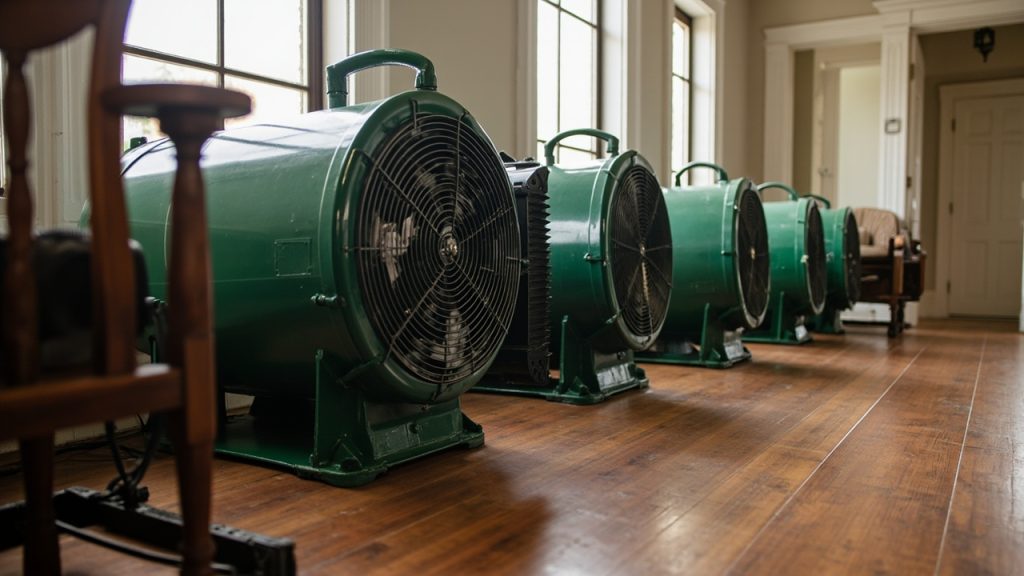
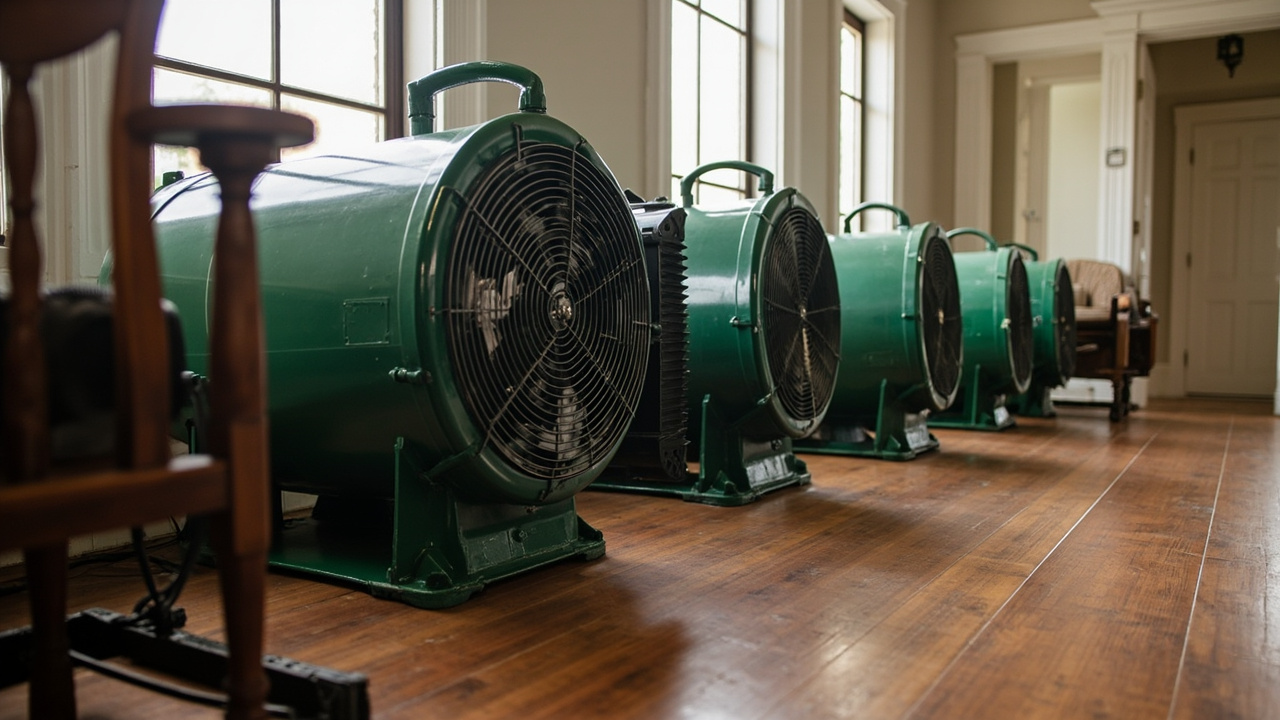
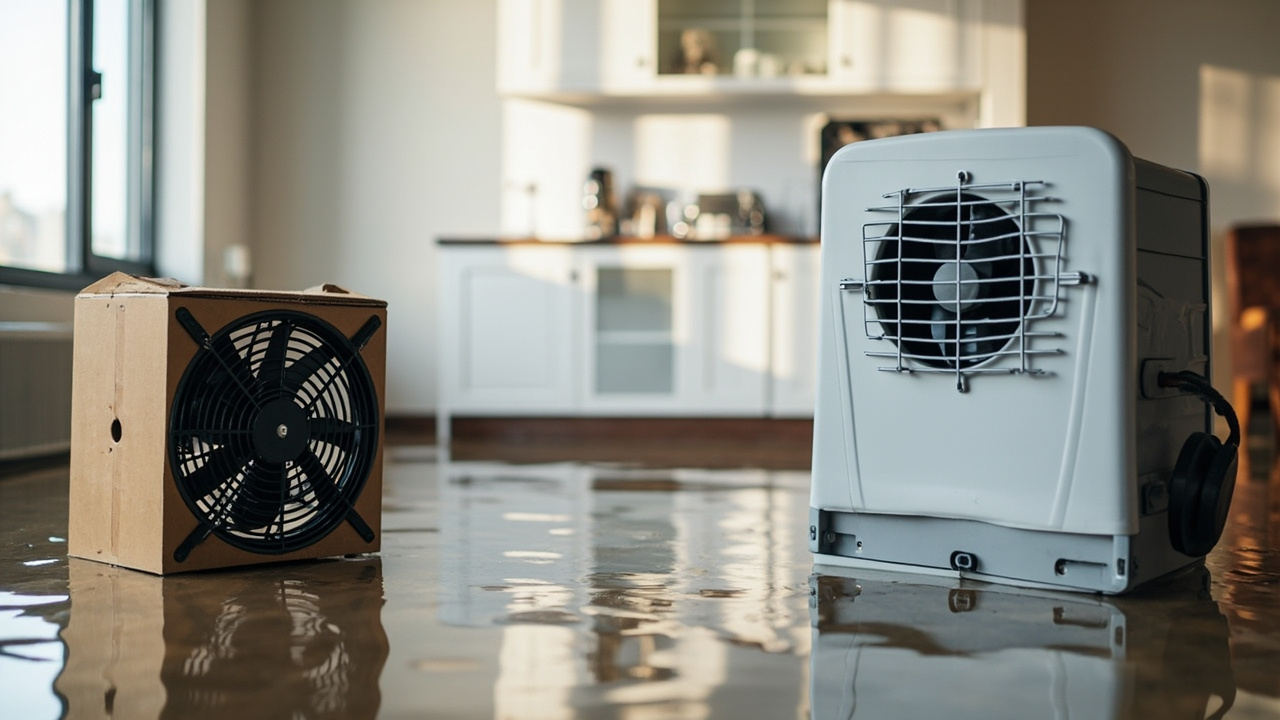
The primary reason a professional air mover outperforms a household fan lies in static pressure. A standard box fan is designed to create a gentle breeze for human comfort. It has low static pressure, which means the air movement dissipates almost immediately after leaving the blades. When you are trying to dry a saturated wall in an Audubon mansion, you need air that can push through the boundary layer of moisture sitting on the surface of the material.
Professional axial air movers and centrifugal fans are engineered to create high-velocity airflow that maintains its speed over long distances. This concentrated stream of air creates the necessary turbulence to break the surface tension of the water. Without this high-velocity movement, the air near the wet floor remains saturated, which halts the evaporation process entirely. If the air at the surface of the floor is just as wet as the floor itself, no drying will occur regardless of how many household fans you have running.
| Feature | Standard Household Box Fan | Professional Axial Air Mover |
|---|---|---|
| Airflow Volume | 1,200 to 2,000 CFM | 3,000 to 4,500 CFM |
| Static Pressure Capability | Near Zero | High High-Performance Blades |
| Power Draw | 0.5 to 1.5 Amps | 2.0 to 3.0 Amps (High Efficiency) |
| Adjustable Angles | None or Limited | 360 Degree Rotation |
| Stackability | No | Yes (Up to 10 Units) |
As you can see from the technical specifications above, the sheer volume of air moved by professional equipment is nearly triple that of a household unit. Furthermore, professional units are designed to be daisy-chained together. This allows a technician to power multiple high-output fans from a single outlet without tripping breakers, which is a common issue when homeowners try to run dozens of small fans at once in older Uptown homes with dated electrical panels.
The New Orleans Humidity Factor
In 2026, we have seen local humidity levels regularly sustain over 90 percent during the summer months. This atmospheric moisture creates a massive hurdle for any DIY drying effort. When the outdoor air is already saturated, simply opening the windows of your Audubon home will introduce even more moisture into the structure. This is where the science of Grains Per Pound (GPP) becomes critical. GPP measures the actual weight of the water vapor in the air.
Professional grade equipment includes more than just fans. We use Low Grain Refrigerant (LGR) dehumidifiers that can pull moisture out of the air even when the humidity is relatively low. A box fan has no way to remove water from the room. It only moves it from the floor into the air. If that airborne moisture is not removed by a professional dehumidifier, it will eventually settle back into your ceiling, your furniture, and your drywall. This leads to what we call secondary damage. For a detailed look at how we handle complex environments, see our guide on professional mold remediation and preservation for Garden District historic mansions which share similar structural challenges with Audubon homes.
Risks of Using Inadequate Drying Tools
Using the wrong tools for drying leads to a false sense of security. You might feel the surface of your carpet and think it is dry, but the padding underneath and the subfloor below that can remain dangerously wet for weeks. This hidden moisture is the primary cause of structural rot and microbial growth. In 2026, the cost of a full mold remediation far exceeds the cost of proper initial drying. If you are dealing with water from an outdoor source or a sewage backup, the risks are even higher. In those cases, you should immediately look into who to call for emergency sewage cleanup in Metairie or your local New Orleans neighborhood to ensure the pathogens are handled correctly.
Box fans also lack the filtration systems found on professional restoration equipment. When a home is flooded, the air is often filled with dust, debris, and potential mold spores. Professional air movers often work in tandem with HEPA air scrubbers. These machines pull the air through a series of filters to remove 99.97 percent of particles. A household fan just blows those particles around the room, potentially spreading contaminants into unaffected areas of your home. This is especially concerning if you have a kitchen flood. For those specific scenarios, you can read more about emergency kitchen flood response in Uptown New Orleans.
The Speed of Evaporation in 2026
Time is the most critical factor in any restoration project. After 48 hours, the likelihood of mold growth increases exponentially. Professional air movers are designed to run 24 hours a day for weeks at a time without overheating. Most household fans are not built for continuous heavy-duty use and can become a fire hazard if left unattended in a damp environment. The speed at which professional equipment can stabilize a room is significantly faster than any DIY method.
| Material Type | Box Fan Drying Time | Professional Air Mover Drying Time |
|---|---|---|
| Drywall (Single Layer) | 72 to 96 Hours | 24 to 36 Hours |
| Hardwood Flooring | Often Fails to Dry | 48 to 72 Hours (with floor mats) |
| Carpet and Padding | 48 to 72 Hours | 12 to 24 Hours |
| Structural Studs | 96+ Hours | 36 to 48 Hours |
The table above highlights that for many materials, a box fan simply cannot move enough air to reach the required drying goals before damage becomes permanent. For residents in the Lakeview area who deal with high water tables, speed is even more vital. You can find more information on quick response water damage restoration for Lakeview homeowners in New Orleans to see how we manage these tight timelines.
Moisture Detection and Verification
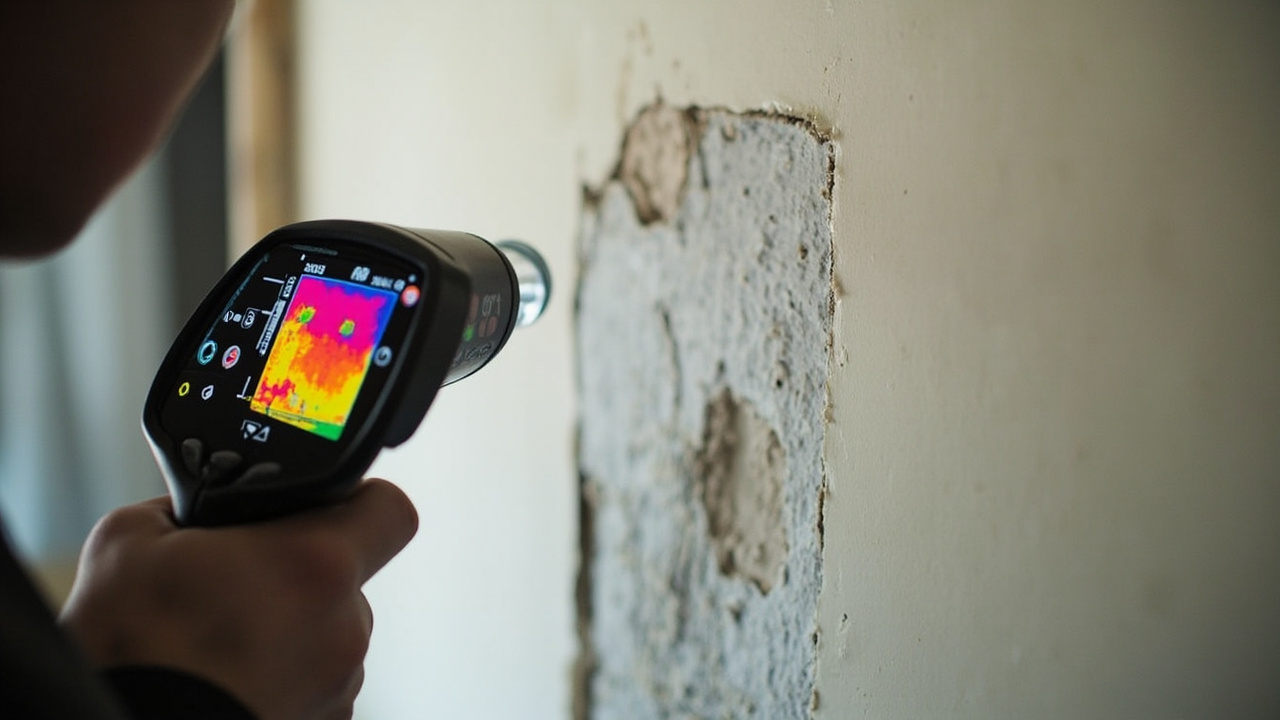
Another area where professional services surpass DIY efforts is the use of moisture detection technology. You cannot manage what you cannot measure. A homeowner with a box fan is usually guessing when the room is dry. We use thermal imaging cameras and moisture meters to find water hidden behind baseboards and under cabinets. We follow the IICRC S500 standard for professional water damage restoration to ensure that every project meets national safety and quality guidelines.
In Audubon homes where plaster walls are common, water can travel up the wall through capillary action. A fan blowing on the floor will never reach the water that has wicked three feet up into the wall structure. We use specialized wall-venting air movers that force dry air into the wall cavities. This prevents the need to tear out beautiful historic plaster by drying it from the inside out. Without this specialized gear, that trapped moisture will eventually lead to black mold. If you suspect mold has already started to form, you should consult an expert like those specializing in professional black mold removal for homes in Algiers and other New Orleans districts.
Structural Integrity and Long Term Protection
The long-term value of your Audubon property depends on its structural integrity. Wood rot and soft drywall are not just aesthetic issues. They are safety concerns. When a home stays wet for too long, the cellulose in the wood begins to break down. This attracts pests and weakens the load-bearing capacity of the floor joists. Professional drying equipment ensures that the moisture levels return to the dry standard of the building, which is usually determined by comparing the wet materials to a known dry sample in an unaffected part of the home.
We also monitor the Grains Per Pound (GPP) of the air coming out of the dehumidifiers versus the air going in. This is known as the grain depression. A high grain depression means the equipment is successfully stripping water from the air. Household fans provide no such data. You are essentially flying blind, hoping that the air movement is doing enough to prevent a massive repair bill in the future.
The 2026 hurricane season and the regular afternoon thunderstorms in New Orleans mean that water damage is a constant threat. Being prepared with the knowledge that professional equipment is a requirement, not an option, can save your home from permanent damage. The combination of high-velocity airflow from axial movers and the moisture-slaying power of LGR dehumidifiers is the only way to combat the 90 percent humidity levels we see in the Crescent City.
Choosing Professional Intervention for Your Property
If you have more than a few square feet of wet carpet, it is time to put the household fans away. The risk of permanent damage to your Audubon home is too high to rely on tools meant for personal cooling. Professional restoration companies bring thousands of dollars worth of specialized machinery to your doorstep, all designed with one goal in mind which is returning your home to a pre-loss condition as quickly as possible. We understand the nuances of New Orleans architecture and the specific demands of our local climate. Whether you are dealing with a small leak or a major flood, the science of drying requires the right tools for the job. Contact a professional restoration team to get a full moisture map of your property and ensure that your drying plan is rooted in data and physics rather than guesswork.